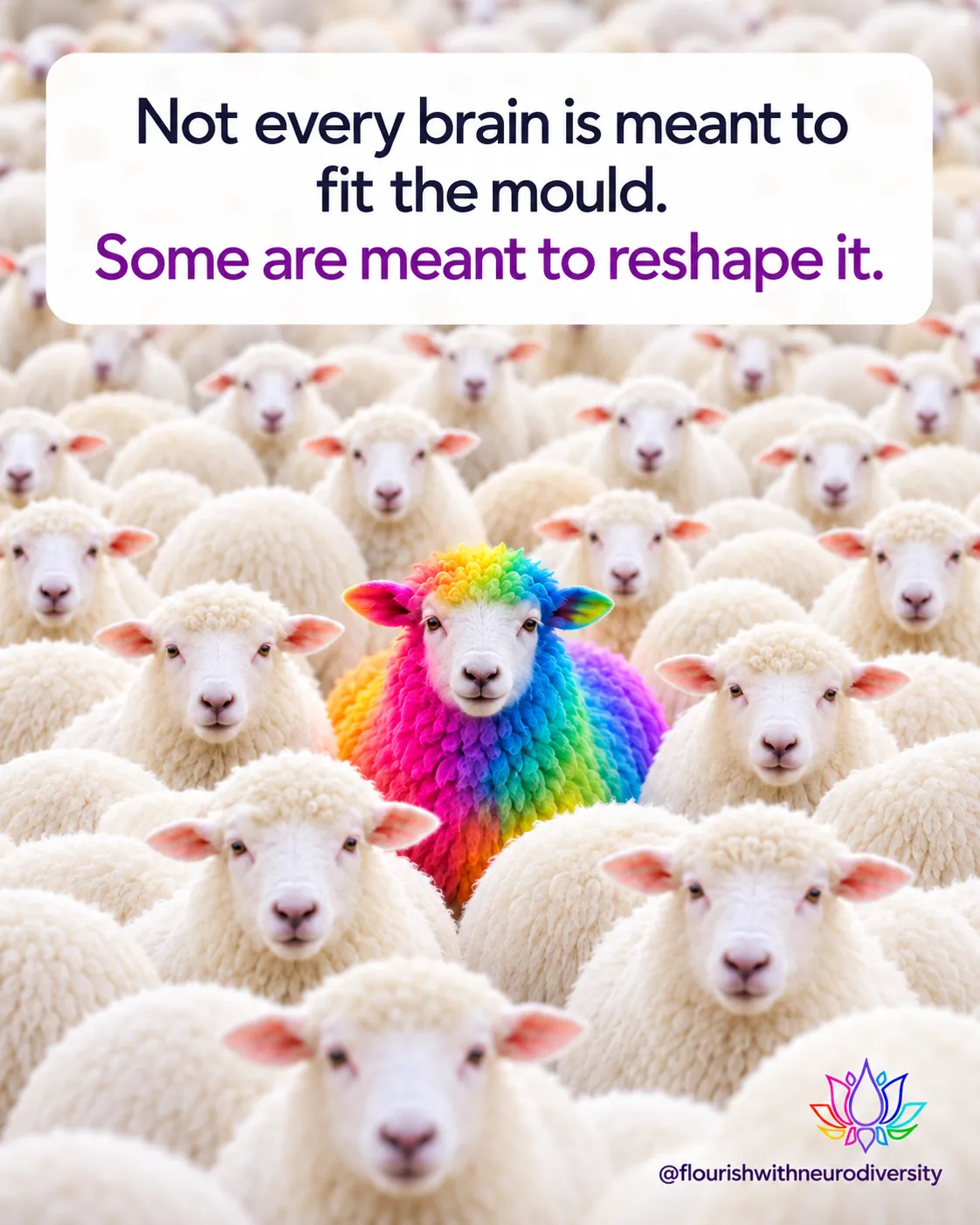
Not Every Brain Is Meant to Fit the Mould: Recognising Neurodivergent Strengths
There can be so much focus on the challenges of being neurodivergent: executive dysfunction, sensory overload, burnout, difficulty with organisation, social exhaustion, anxiety, masking, restlessness and emotional overwhelm. All of these can be very real and can have a significant impact on daily life.
But neurodivergence is not only about difficulty. Neurodivergent people can also bring incredible strengths, perspectives and ways of thinking that may not always fit neatly into traditional environments. Creativity, pattern recognition, deep focus, passion, problem-solving, curiosity, innovation, seeing connections other people may miss and questioning systems that do not make sense can all be part of the picture.
The problem is not that a neurodivergent person is failing to fit the mould. The mould itself is simply too narrow.
Neurodivergent strengths are not “superpowers”
It is important to be balanced when we talk about neurodivergent strengths. Calling neurodivergence a “superpower” can feel empowering for some people, but it can also feel dismissive when someone is struggling with very real disability, exhaustion or daily barriers.
A neurodivergent person may be highly creative and still find it incredibly difficult to answer emails. They may have exceptional pattern-recognition skills while struggling to manage multiple demands at once. They may be deeply passionate about their work while experiencing sensory overload in the environment where that work takes place.
Strengths and difficulties can exist at exactly the same time. The aim is not to pretend that neurodivergence is always positive. It is to recognise that a deficit-only view does not tell the whole story either.
Different brains can bring different ways of thinking
One of the things I love about working with neurodivergent people is seeing just how varied thinking styles can be. There is no single “neurodivergent brain”. Autistic people, people with ADHD, AuDHDers, people with Tourette’s, dyslexia, dyspraxia and other neurodivergent profiles are all different, and even people with the same diagnosis can have completely different strengths, support needs and ways of processing information.
Some neurodivergent people are particularly good at spotting patterns. This might mean noticing inconsistencies in data, recognising recurring problems, identifying themes in conversations or seeing connections between ideas. In a workplace, that could look like spotting inefficiencies that others have become used to. In creative work, it might mean linking ideas together in unusual ways.
Many neurodivergent people also experience strong interests or periods of intense focus. When the topic matters, they may learn quickly, research deeply and bring an enormous amount of energy to it. This can lead to expertise, innovation and work that feels meaningful. The challenge is that passion is not always available on demand. A brain that can focus intensely on something meaningful may still struggle significantly with repetitive, unclear or low-interest tasks.
Thinking outside the box can also be a strength. Neurodivergent people may be more likely to question assumptions, ask why something is done in a particular way or look for a different solution. In some environments, this can be misunderstood as being difficult or not following convention. In the right environment, the same trait can become creative problem-solving and innovation.
Sometimes neurodivergent people are not failing to think inside the box. They are simply wondering why the box exists in the first place.
Why strengths can disappear during burnout
One of the most important things to understand is that strengths are much harder to access when a person is exhausted. Someone may know that they are creative, capable and passionate, but if they are in burnout they may not feel like any of those things.
Burnout can affect memory, motivation, communication, emotional regulation, sensory tolerance and executive functioning. A person who usually generates ideas easily may suddenly feel blank. Someone who is normally enthusiastic about their work may struggle to begin even small tasks. A person who is normally articulate may find communication much more difficult.
That does not necessarily mean their strengths have disappeared. It may mean their nervous system no longer has enough capacity to access them. This is why conversations about strengths have to include conversations about environment, demand, energy and regulation.
The environment matters
We often ask people to become more resilient without looking closely enough at what they are being asked to tolerate. A noisy workplace, constant interruptions, back-to-back meetings, unclear expectations, bright lighting, too much social interaction, rigid working hours, pressure to respond immediately and no recovery time between tasks can all take a significant toll.
For some neurodivergent people, these environments use up enormous amounts of energy before they have even begun the actual work. If most of your capacity is being spent managing the environment, there is less available for creativity, concentration and problem-solving.
The same person can look completely different in a setting that works for their brain. Clearer expectations, fewer unnecessary meetings, access to headphones, written communication, flexible working, reduced sensory demands and more recovery time can make an enormous difference.
Sometimes strengths that seemed to be missing were not missing at all. They were simply buried underneath overwhelm.
From surviving to thriving
For many neurodivergent adults, life has involved a lot of adapting. Trying to keep up, trying not to appear different, trying to push through exhaustion and trying to organise themselves in ways that work for everyone else can become deeply draining over time.
There can also be years of trying to be less sensitive, less intense, less distracted, less restless or less “too much”. This can create a constant sense of having to work against yourself.
Thriving does not necessarily mean becoming more productive. It can mean understanding yourself well enough to stop fighting your own nervous system. It can mean recognising what drains you and what restores you, building routines around how your brain actually works and identifying which environments help you function at your best.
It can also mean recognising strengths that may always have been there but were hidden underneath stress, masking or overwhelm.
Strength-finding in neurodiversity coaching
Strength-finding is one of the areas that can be explored through neurodiversity coaching. This is not simply about sitting down and making a list of things you are “good at”. It can be much deeper than that, especially for people who have spent years focusing on what they struggle with.
Coaching can help explore questions such as what comes naturally to you, what kinds of problems other people come to you for help with, what you notice that others sometimes miss and what activities leave you energised rather than depleted. It can also help you look at when you think most clearly, what environments support you best and where you may be masking or forcing yourself to work in a way that does not suit you.
Sometimes this process involves recognising strengths that may previously have been framed negatively. “Too intense” may also mean deeply passionate. “Questions everything” may mean analytical and curious. “Gets bored easily” may reflect a strong need for novelty and stimulation. “Sensitive” may also mean highly perceptive.
Of course, not every challenge needs reframing into a strength. Sometimes a difficulty is simply difficult. But understanding the fuller picture can help someone develop a much more compassionate and accurate view of themselves.
You do not have to earn support through your strengths
A strengths-based approach should never become another demand. You do not need to turn every neurodivergent trait into productivity, monetise your interests or constantly prove the value of your brain.
You also do not have to be exceptionally talented to deserve support. Every neurodivergent person deserves environments that recognise their needs, whether or not those needs come with an obvious workplace advantage.
Strength-finding is about identity, self-understanding and creating a life that works better for you. It is not about proving your worth.
Maybe the goal is not to fit the mould
Many neurodivergent people have spent years trying to squeeze themselves into environments, routines and expectations that were never designed with them in mind. Sometimes the most powerful shift is asking a different question.
Instead of asking, “How can I make myself fit this?”, it can be more helpful to ask, “What would need to change for this to work better for me?”
That might mean changing the environment, reducing demands, using different tools, setting stronger boundaries, asking for reasonable adjustments, creating more recovery time or simply giving yourself permission to do something differently.
When neurodivergent people are given the right support, understanding and environment, their strengths often have much more room to emerge.
Because not every brain is meant to fit the mould. Some are meant to reshape it
At Flourish With Neurodiversity, coaching is centred around understanding your individual brain, recognising your strengths and needs, and building more sustainable ways of working and living. The aim is not to turn you into someone else. It is to help create the conditions where you can move away from constantly surviving and towards something that feels more like thriving.
Find out more: www.flourishwithneurodiversity.com
